


The Nazi Starvation Strategy
Give the dog a bona
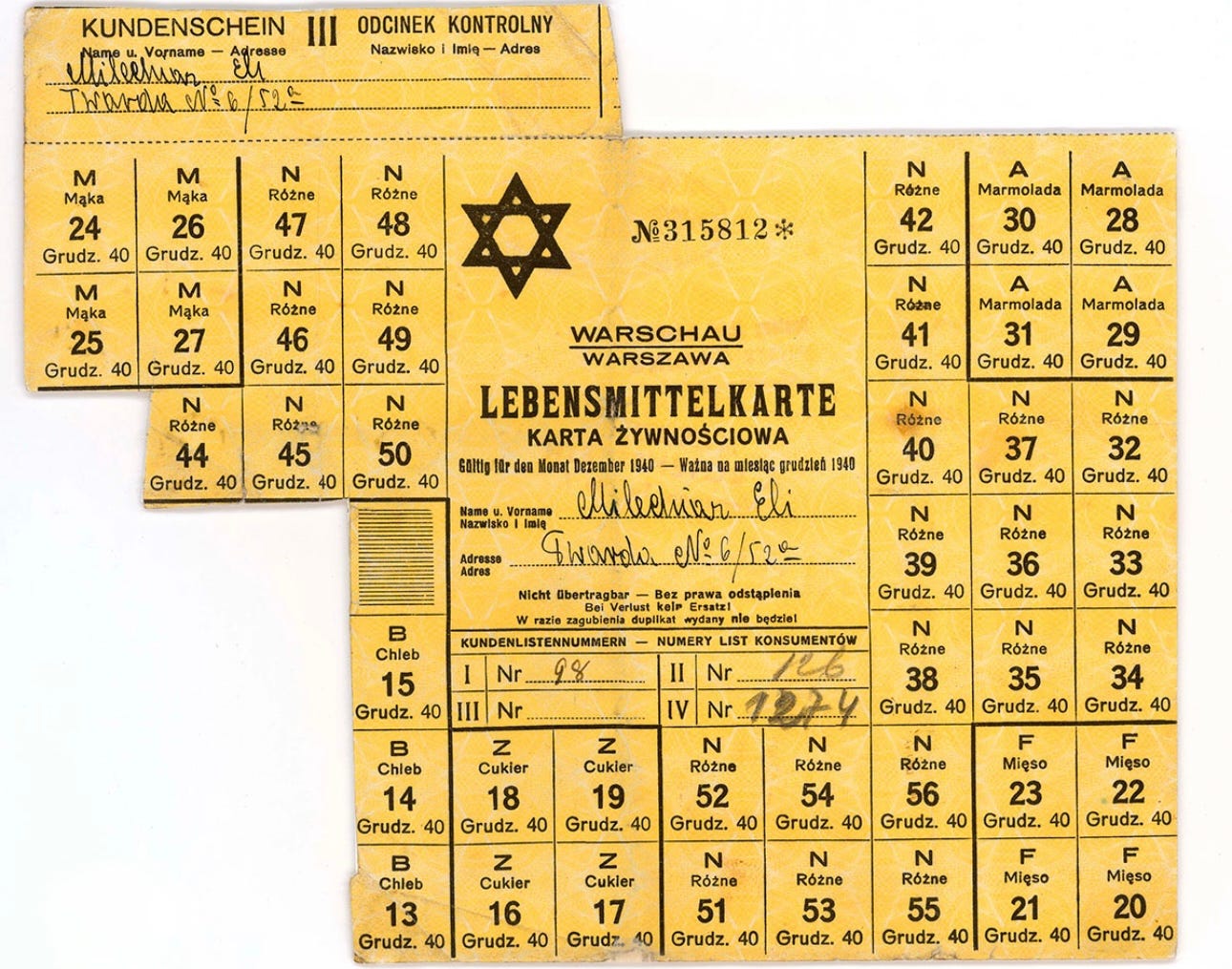
Every resident of the Warsaw Ghetto received a ration card.
A small yellow slip of paper.
Official. Stamped. Regulated.
It entitled the holder to a quarter pound of bread per day.
One egg per month.
Two pounds of vegetable jam.
That was all the food the Nazis authorized Jews to have.
The cards were called bona.
A word used with bitter irony.
Something given, not owed.
Scraps.
The Germans had done the math.
Daily rations in occupied Warsaw:
- Germans: 2,613 calories
- Poles: 699 calories
- Jews: 184 calories
One hundred eighty-four calories a day.
Less than two slices of bread.
A growing child needs nearly ten times that amount to survive.
This was not neglect.
It was policy.
The Nazis were not merely imprisoning Jews behind walls. They were engineering their slow death.
Starvation as strategy.
Hunger as a weapon.
By 1941, more than five thousand people a month were dying inside the Warsaw Ghetto.
Not from bullets.
Not from gas chambers—those would come later.
They died from what happens when the human body consumes itself: organs failing, immune systems collapsing, hearts giving out.
Edna was six years old.
What a Child Saw
Nearly 100,000 children lived in the Warsaw Ghetto.
Edna was one of them.
She learned quickly what hunger looks like.
- Bodies on the sidewalks in the morning, covered with newspapers because there was nothing else
- Children her own age with swollen bellies and hollow eyes, begging
- Mothers who stopped eating entirely, passing their crumbs to children who would die anyway
Soup kitchens opened throughout the ghetto.
Thin broth.
Occasionally a potato chunk.
Sometimes a bit of barley.
People lined up before dawn, clutching bowls and spoons like sacred objects.
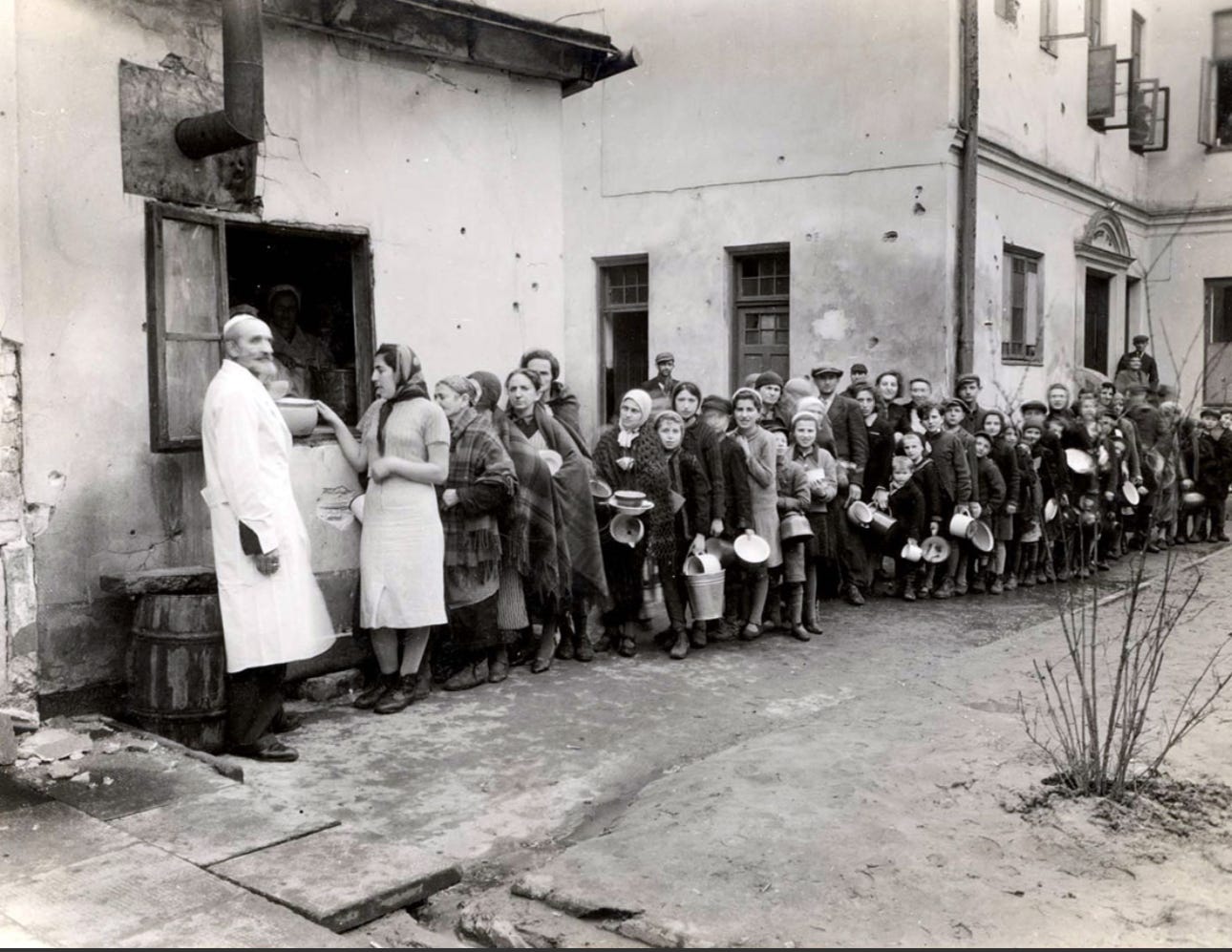
But watery soup cannot sustain a human being.
The kitchens kept people alive a little longer.
They did not keep people alive.
Markets still operated:
- Dark bread
- Potatoes
- Wilted vegetables
- Ersatz coffee
If you had money, you could find food—smuggled in by those willing to risk their lives, sold at prices that rose every week.
The Szurek family had some resources.
Many had none.
Children died by the tens of thousands from starvation, disease, and cold.
Some children killed themselves to escape lives that had become unendurable.
Edna saw all of it.
When the Men Were Taken
Then Papa and Schlomo were sent to a labor camp in Lublin.
The Germans promised wages. The men would work. Money would be sent back to their families.
It sounded like survival.
It sounded like hope.
The money never came.
Without the men, the family had:
- No income
- No way to supplement the starvation rations
- No margin for error
As conditions worsened, families ate things they never imagined eating:
- Potato peels
- Rotting beets
- Bread cut with sawdust
People picked through garbage for scraps. They fought over food that once would have been thrown to pigs.
The soups grew thinner.
The bread grew darker.
Still, it was not enough.
That was when the horse meat appeared.
For observant Jewish families, this was unthinkable. Horse is not kosher. For generations, the laws of kashrut had governed what could and could not be eaten.
But the rabbis understood.
They ruled that when life is at stake, the law bends.
- First for pregnant women
- Then for the sick
- Then, as the dying accelerated, for everyone
Edna’s family ate horse meat after Papa and Schlomo were gone.
It was not a choice.
It was arithmetic.
You eat what is available or you die.
You feed your children what you can find or you watch them starve.
The traditions that had sustained Jewish life for centuries gave way to a more ancient imperative:
Live.
The Children Who Smuggled
Yakov understood what had to be done before anyone said it aloud.
He was a teenager. Old enough to see the end coming.
He began slipping out of the Warsaw Ghetto:
- Learning which streets were safe
- Making contacts
- Selling valuables for families who shared their cramped apartment
Every day Yakov left the ghetto.
Every day he came back with something.
Then the two youngest joined him.
Shulamit made an impossible calculation.
Edna and Miriam were small enough to fit through gaps in the wall.
- Edna was blonde
- Miriam was brunette
- Both had brown eyes
They could pass as Polish children on the other side.
Their mother did not want to send them.
But she was watching her children starve.
Edna was seven years old when she first slipped through a hole in the wall.
Children crossed:
- Through gaps in bricks
- Through tunnels beneath foundations
- Over ten-foot walls topped with broken glass and barbed wire
Everyone knew the penalty.
Smugglers who were caught were hanged in the square. Their bodies left dangling for hours—sometimes days.
Men.
Women.
Children.
Edna saw the bodies.
Then she went anyway.
On the Aryan side, Yakov went off on his own. Edna and Miriam performed for coins—singing, dancing, passing a hat.
They became good at it.
Sometimes they paid vendors to save the best spots. Edna wore a hat perched on her blonde curls. People always dropped coins into it.
They bought:
- Bread
- Potatoes
- Carrots
Whatever they could carry back through the wall.
At first, they crossed two or three times a week.
Soon, it was every day.
Each time Edna squeezed through the gap, she knew she might not return.
Each time she came back with food hidden in her clothes, she kept her family alive one more day.
She was seven.
This was survival in the Warsaw Ghetto.
Not waiting for rescue.
Not hoping for mercy.
A mother sending her children through a wall because the alternative was watching them die.
The ration cards were called bona.
A bitter joke.
Something given.
Never enough.
Never meant to sustain life.
But the children who crawled through those walls—who risked bullets, beatings, and the noose for a loaf of bread—proved the Nazis wrong.
They were not animals.
They were not begging for scraps.
They were fighting to live.
And some of them did.
Including a seven-year-old girl named Edna.
—
Janet Bond Brill, PhD, is the author of Little Edna’s War, based on her mother-in-law’s Holocaust testimony, published on January 27, 2026, on International Holocaust Remembrance Day. Order Now


